Changing conditions at Tunnel View: The challenges of landscape photography
Photography is all about chasing light. In many photographic disciplines, photographers can shape and control that light—using flashes and strobes, diffusers, reflectors, and flags—crafting the scene exactly as they envision. Landscape photography, however, operates under different rules. You don't set the sun or summon sunsets on demand. Instead, you respond to what Nature hands you: the angle, color, intensity, and texture of available light, all changing by the minute, or even by the second. That unpredictability is both a constraint and the medium itself. It demands patience, situational awareness, and a readiness to move with the light. A landscape photographer must anticipate weather, read clouds, and choose vantage points that translate fleeting moments into lasting photographs. The result is a practice where technical skill meets humility: mastering exposure, composition, and timing, while accepting that the mood and drama of a scene are often products of forces far beyond human control. In that dynamic interplay, landscape photographers learn to listen to light, to wait for it to reveal the story of a place, and to capture those ephemeral instants when land and sky align in perfect, unrepeatable harmony. To quote Glen Randall, a wilderness landscape photographer, whose work I greatly admire and draw a lot of inspiration from, “landscape photographers must have a brain of an engineer and the heart of a hopeless romantic.”
The Tunnel View, located in the famous Yosemite Valley in Yosemite National Park, the crown jewel of California’s Sierra Nevada, is an easily accessible vista where photographers from all over the world travel to in hopes of capturing their own version of Ansel Adams’ famous Tunnel View photos. Such an iconic place that’s easy to get to is kind of a double-edged sword. The ease of access makes it relatively straightforward to arrive and set up, so one can photograph it often without much planning. However, that very same accessibility means anyone with a phone or camera can capture the same view. So how does a landscape photographer stand out from the crowd? The answer is to go during volatile weather, when dramatic conditions transform a familiar scene into something unexpected and unmistakably personal.
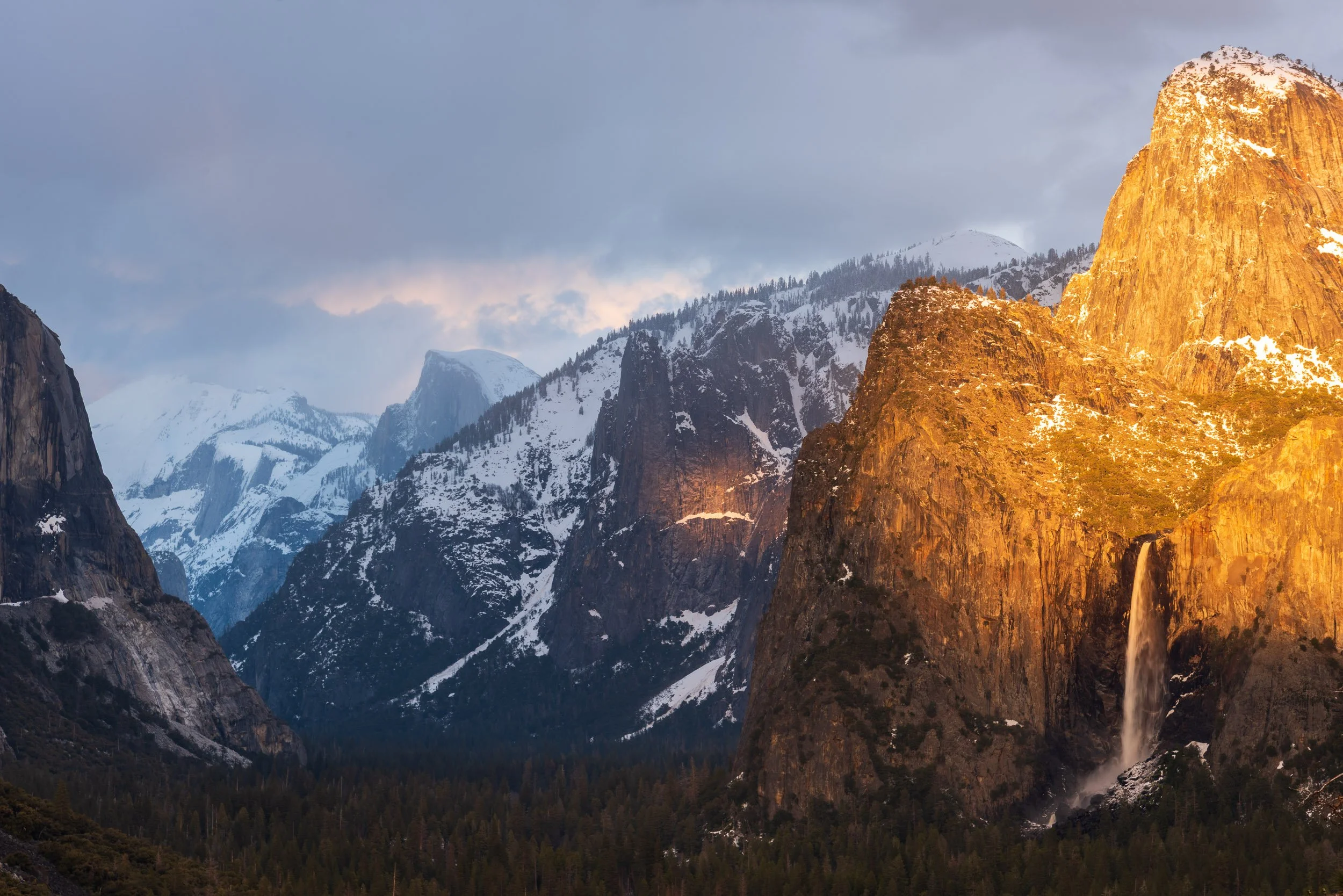
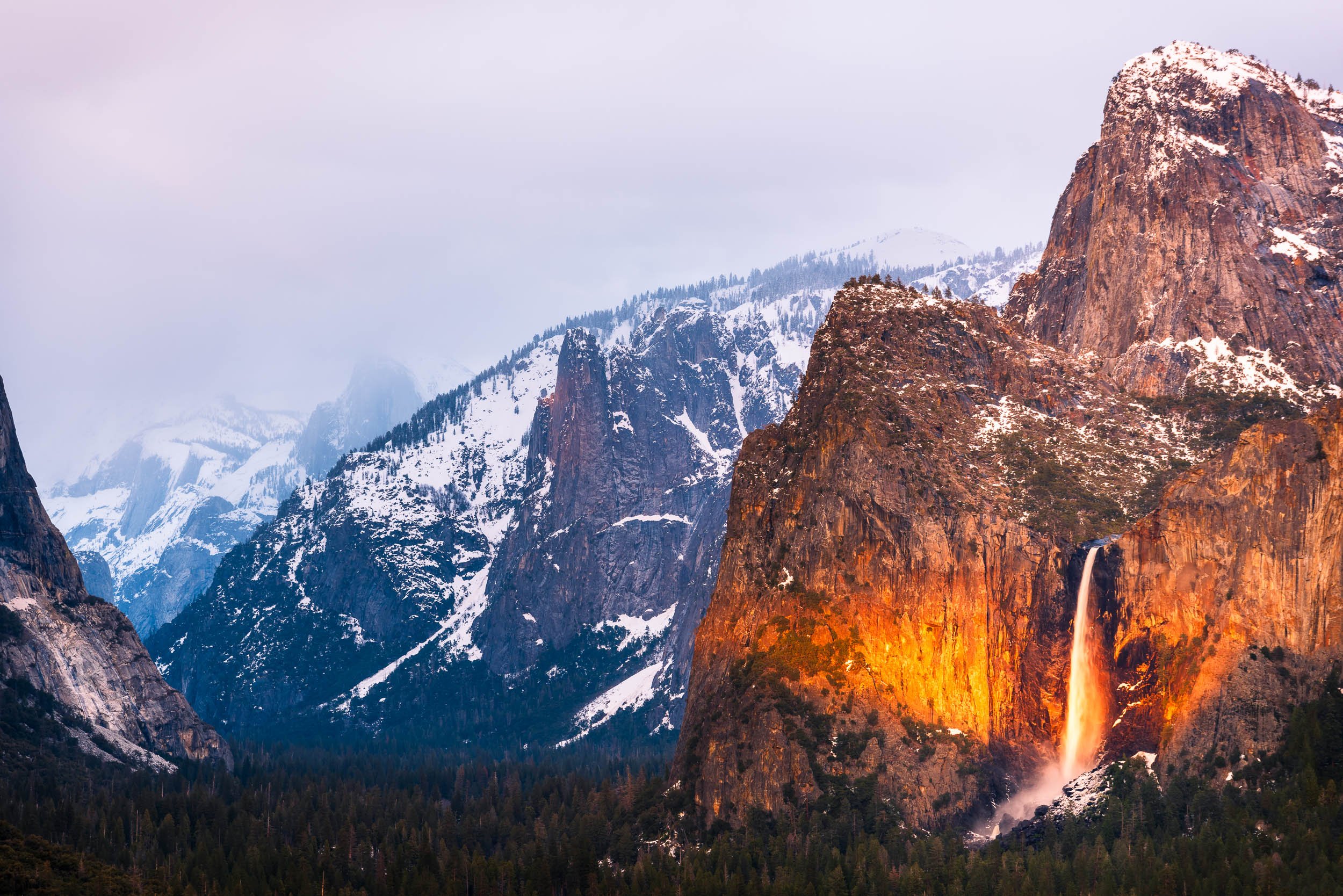
My favorite months at Tunnel View are March and April, when Yosemite shifts from winter to spring. Waterfalls stir awake, awakening from small trickles to thundering cascades; the sky grows volatile and uneasy, as if Nature is unsure whether to make it a blue-bird day or a moody stormy day. As the sun sets, its light shifts from El Capitan toward the Cathedral Rocks and Spires, eventually finding a balance between the two iconic formations. Gradually the illumination roams like a wandering spotlight, sweeping over the Cathedral Rocks and Spires and, at moments, settling on Bridalveil Fall. Each sunset feels improvisational: one moment a soft hush, the next an electric drama, and the valley answers in rushing water, wind, and shifting shadow. This rapidly changing light often brings challenging conditions to shoot, with lighting conditions changing very rapidly.
Take the three photographs below for example. Believe it or not, these were all taken with at most 6 minutes apart from another on March 25, 2023.
Looking at them side by side, the technical details—aperture, ISO, exposure adjustments—take a backseat to the simple act of staying present. In less than ten minutes, an approaching spring storm completely rewrote the mood of the valley, proving that even the most photographed places on Earth never tell the exact same story twice.